
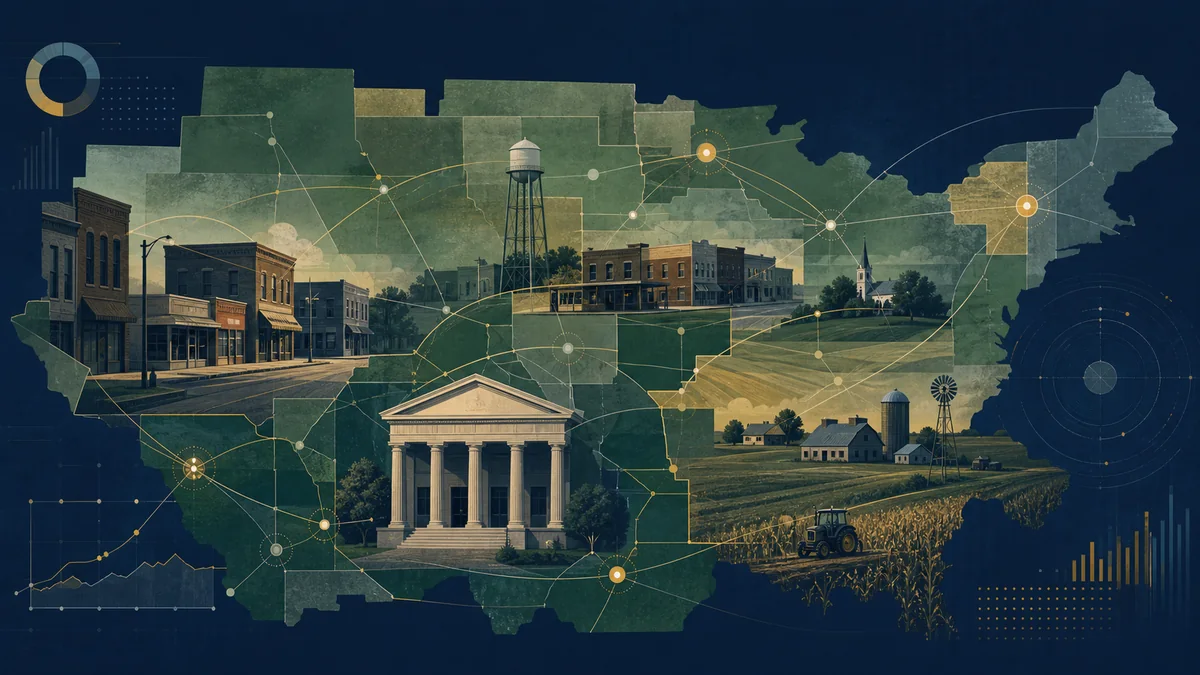
Federal banking agencies released the 2026 list of distressed or underserved nonmetropolitan middle-income geographies, according to a Federal Reserve press release dated June 30, 2026. The topic sounds technical, but it can matter for how banks document community-development activity in rural and smaller-market areas.
Source: Federal Reserve press release. The Fed RSS feed listed the item with a publication time of Tue, 30 Jun 2026 14:00:00 GMT.
What the list is used for
The list helps identify nonmetropolitan middle-income geographies that are considered distressed or underserved under banking-agency frameworks. In plain English, regulators use this kind of designation to help evaluate whether insured depository institutions are serving community credit needs, including in areas that may have limited access to financial services.
This is not a stock-market signal by itself. It is a community-credit and banking-regulation signal. Readers should avoid turning the release into a claim that a particular bank is better or worse without checking that bank's filings, local footprint, and regulator-specific context.
Why investors and consumers might care
For consumers, the topic connects to branch access, small-business credit, farm and rural lending, and local economic resilience. For bank investors, it can be a reminder that deposit franchises and lending opportunities are partly local, not just national interest-rate stories.
Relevant internal reading: Daily Money Radar's market watchlist template and Fed rate decision explainer. For household planning context, the mortgage payment calculator can help illustrate how rates and local housing costs interact.
Educational takeaway
This article is educational only and is not financial, investment, lending, tax, or legal advice. The release is best treated as a public-policy and community-banking reference point, not as a buy-or-sell signal for any bank stock.